Panthers look to find more pace after division losses
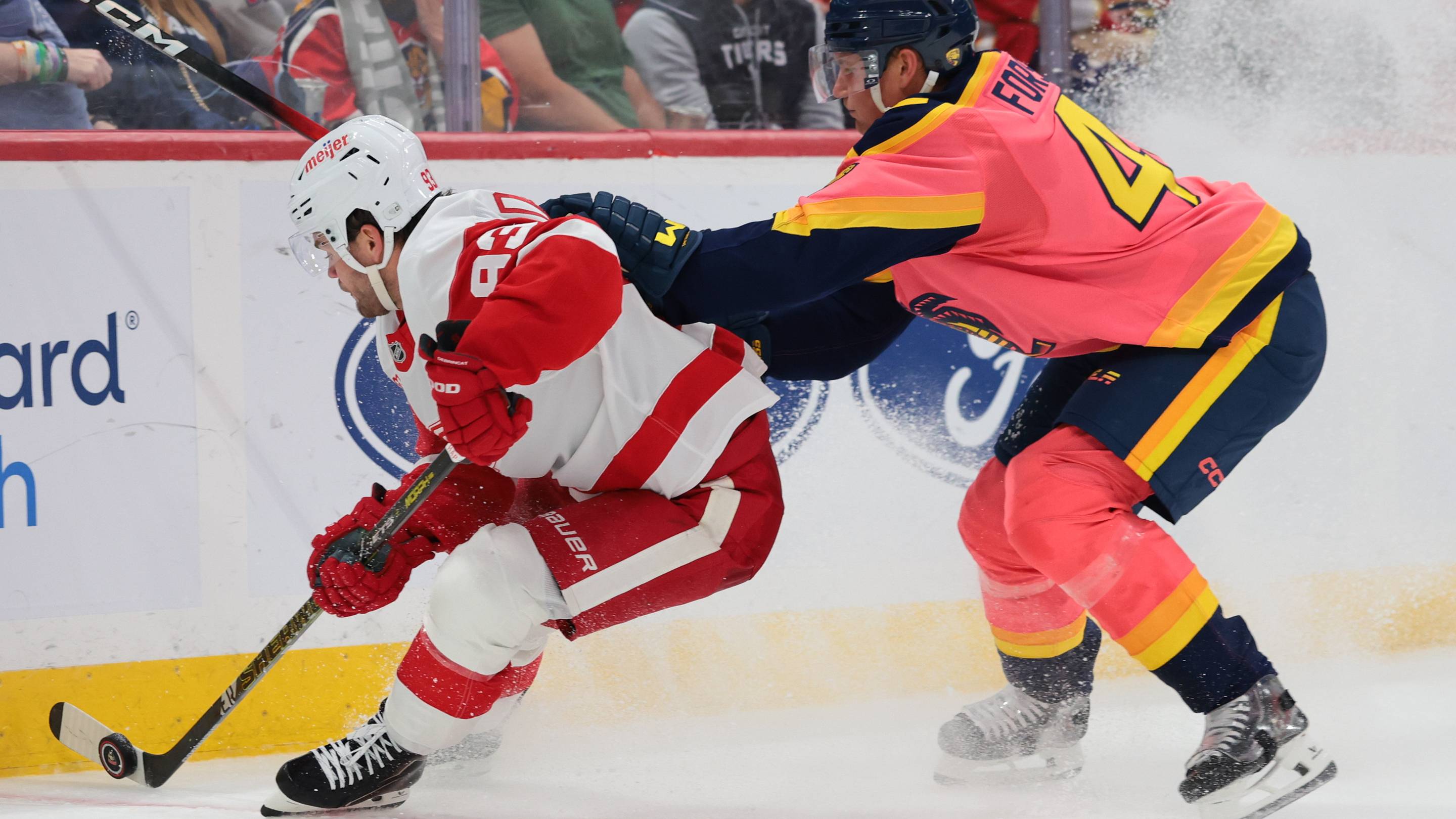
As of November 3, the Florida Panthers are 0-3 against Atlantic Division opponents after 15 games, and coach Paul Maurice says slow play has contributed to their struggles.
Florida’s 5-3 loss to Detroit highlighted a concern that has surfaced in several early-season defeats: the Panthers are not moving the puck or skating quickly enough. Coach Paul Maurice said the team struggled to create chances with the puck in the offensive zone, while forward Sam Bennett said a slow start against the Red Wings carried through the game. Bennett added that improving against division rivals would be a focus.
The Panthers have lost to Detroit, Ottawa and Buffalo, all of them Atlantic Division opponents. Their skating-speed data offers some support for Maurice’s concern: Florida ranks 30th in maximum speed, with defenseman Gustav Forsling’s 22.59 mph the team’s top mark, against a league average of 23.24 mph. The team ranks 29th in speed bursts above 20 mph, with 237 compared with a league average of 309.
Yet Florida spends plenty of time with the puck. It ranks second for the share of even-strength play spent in the offensive zone, at 43.2%, and has the league’s 10th-highest total skating distance. At five-on-five, the Panthers have generated 27 expected goals but scored 22, with a 7.6% shooting percentage. Against Detroit, they held a 43-23 edge in scoring chances but never led.
The Panthers were 8-5-2 and held the Eastern Conference’s second wild-card spot after the Detroit game. They were set to finish their homestand against Chicago on November 4, and the team expected star forwards Sasha Barkov and Brad Marchand to return later in November. Florida’s shooting percentage could rise toward the league average of 8.9%, but its pace against division opponents remains a concern as it tries to return to the playoffs after a one-year absence.